When I audit a site, I want to see which URLs have problems and inspect each page without losing my place. I’d tried building that crawler as a web app before. Running it from a server made the crawl itself harder to manage. This time I built Calm Toad as a free desktop app, so the requests come from the computer running it. It’s one of 48web’s own products.
Make the results easy to inspect
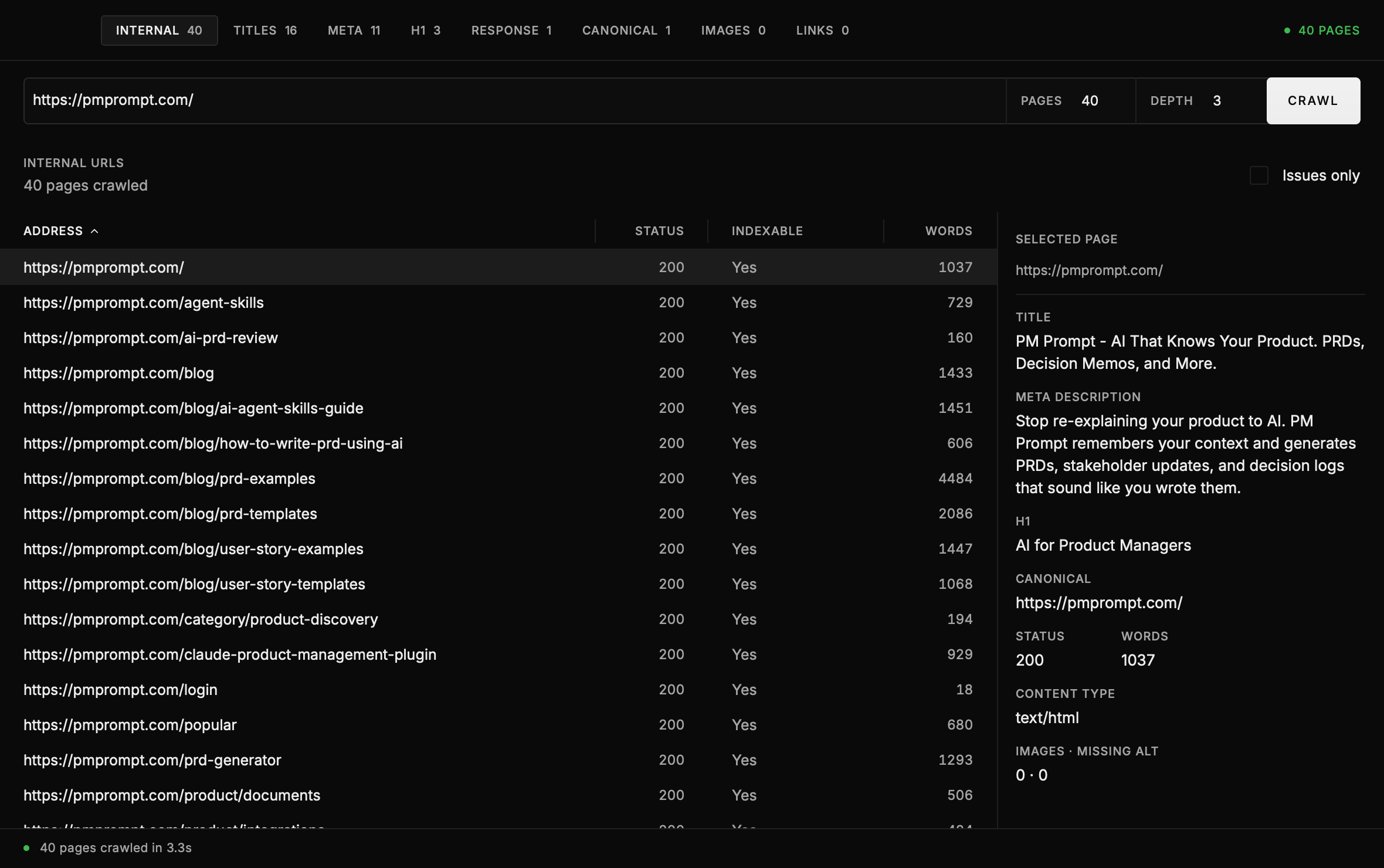
The app is written in Rust with Rune and Rune Kit. Results stream into sortable tables while the crawl runs. Filter to broken links or redirect issues, open a page in the details drawer, then export the tab to CSV with the same filters and sort order. You set the page and depth limits and can stop the crawl when you have what you need.
Version 0.3.0 also reads XML sitemaps, including sitemap indexes and compressed files. That matters because following internal links can miss URLs that are listed in a sitemap but linked from nowhere on the site. Calm Toad distinguishes URLs it hasn’t checked from ones where it found a redirect, error, or indexing directive. When I ran it on PMPrompt, it surfaced indexing issues I hadn’t noticed.
Review the ways an update can fail
We used Codex and OpenCode for implementation and independent reviews. The updater was where those separate reviews paid off. One found a failure path that could remove the backup before the replacement installation was confirmed. Another found that the update could release its lock too early. Both mattered because a failed update has to leave someone with a working app.
Windows exposed a different problem: Git was converting line endings in signed test fixtures during checkout. The files looked the same in an editor, but the bytes had changed, so signature checks failed. We used Git attributes to preserve the fixture bytes and kept the verification intact.
The shipped updater verifies downloads against a signed manifest and installs after you confirm a restart. Windows, Linux, and both Mac builds ship with GitHub release notes and a website changelog generated from the same release content. The agents helped write and review the code; testing the failure paths and coordinating the release were part of getting it out the door.
The app today is a local crawler. Version 0.2.0 added CSV export of the visible tab, and version 0.5.0 added optional Browser mode, which renders pages in a Chrome or Chromium already installed on your computer. Cloud history, crawl comparisons, and AI analysis are planned. Accessibility auditing is an idea for later.
Download the latest Calm Toad or read the original Calm Toad build story.